
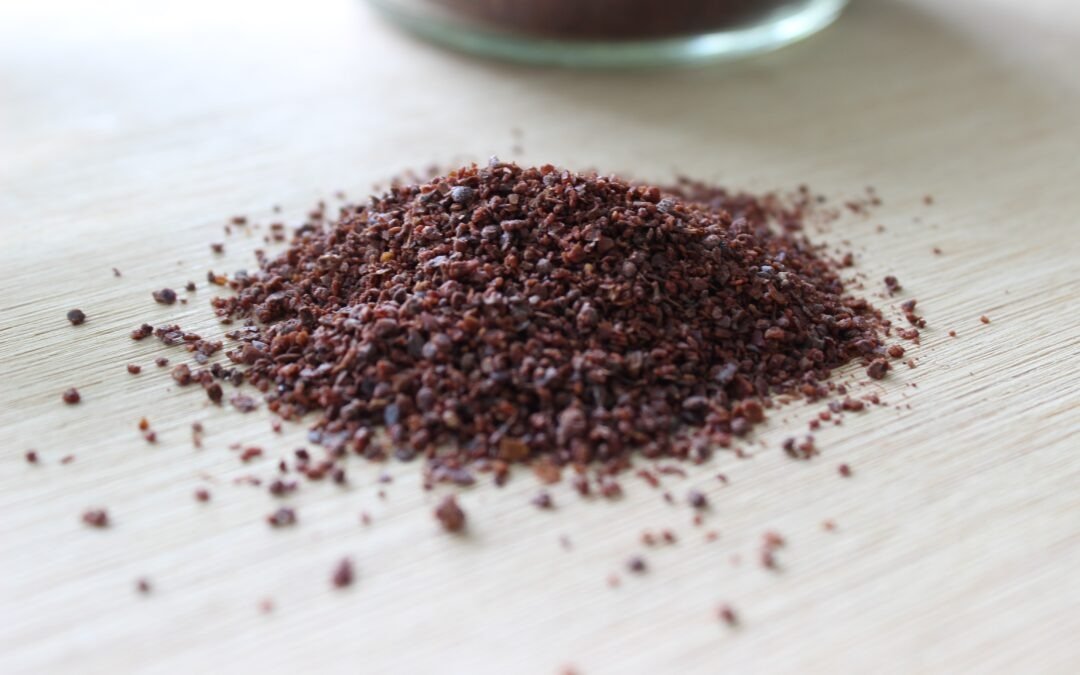
Sumac (also spelt sumach, sumac and soumak) is the beautiful dark-red spice that is often associated with Middle Eastern dishes. Not technically a spice, it is actually made from the fruit of a sumac tree or shrub. The sumac berries are picked just before they ripen, dried in the sun, and then ground into the coarse powder that we know and love as sumac.
Sumacs are from the same family as cashews and pistachios and are typically found in sub-tropical and temperate regions of the Mediterranean, North Africa and North America. There are over 250 different varieties and almost all have red berries, except for the one poisonous variety that is easily identifiable by its berries which are white, not red.
The powder itself is not particularly aromatic but it has a tart, citrussy flavour. It’s not as sour as actual lemons but was frequently used in Roman kitchens before the arrival of said yellow fruit. It also has strong antioxidant and antimicrobial properties: its antiseptic qualities were first documented in Greek medicinal texts more than two thousand years ago.
Sumac is a standard ingredient in the popular spice blend Za’atar and it was a staple in the kitchen when I lived in Turkey but if you’re wondering what can we use it for here in our slightly colder climate? Well, how about any time you might think of adding lemon or lime! You can use it to add a bit of zest to salads, salad dressings (best with ones that don’t already contain vinegar), chopped onions, fish, hummus and yoghurt dips.Sprinkle it as a garnish to add colour and a hint of tang to a sweet or savoury dish just before serving up.

Sumac goes particularly well with fatty meats like lamb and duck but it’s good with chicken too. Although more commonly added to raw dishes, sumac holds its flavour well in a slow-cooked dish. Like salt, it also brings out the natural flavours of the foods that it is cooked with. We’ve added it to our Chicken and Apricot Casserole spice kit to give it a little extra zing!
Sumac doesn’t always feature in the home cook’s spice collection but we think it probably should. It’s beautiful, versatile, and very much underused. So if you think you can make some space in the kitchen cupboard, have a look at the Turkish sumac in stock at our sister company, The Cooking Plumber. It might just be time to start adding some easy zest to your dishes!